
FOUNDER, PROPRIETOR AND VIGOROUS DOMESTIC BRANDER
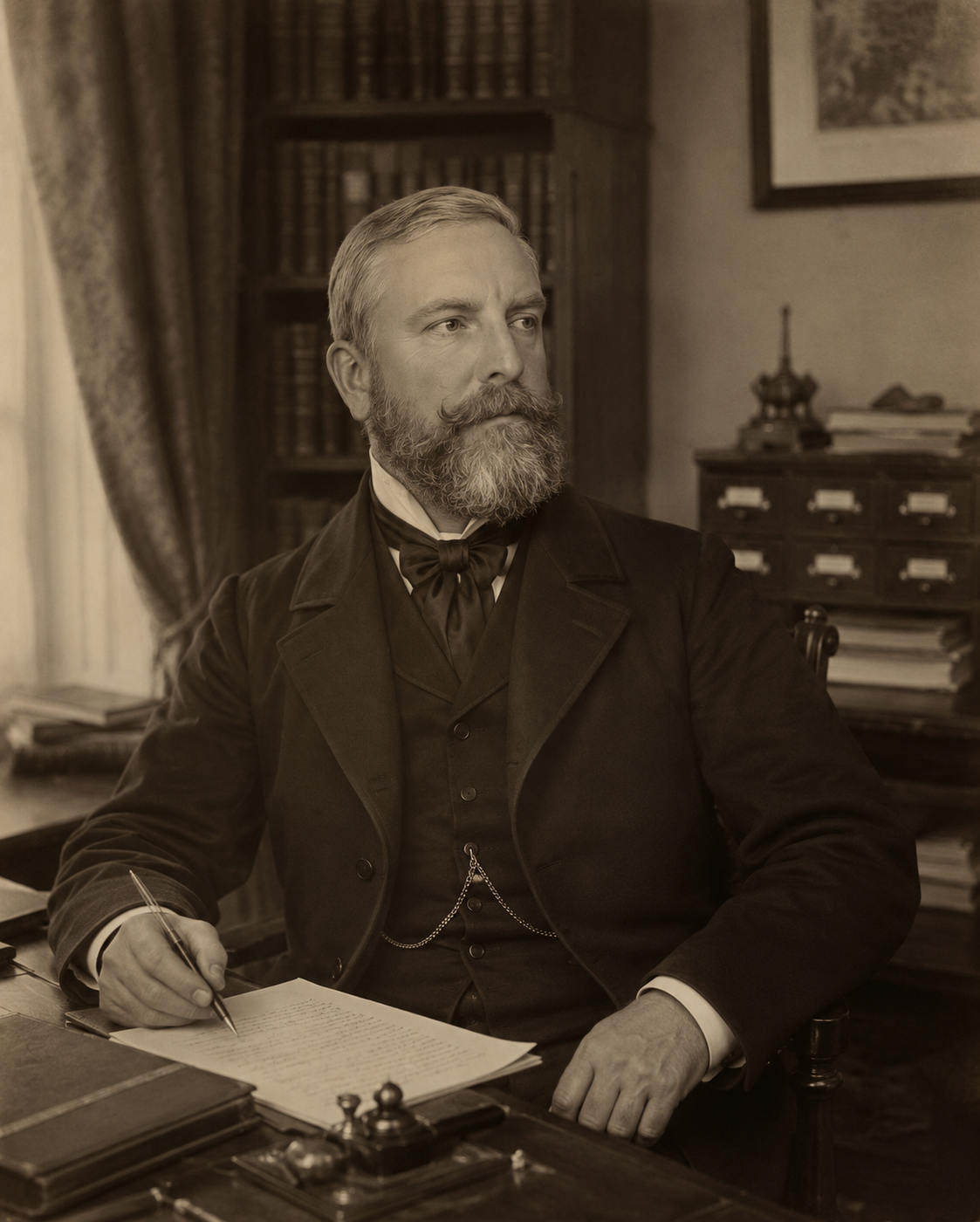
Percival Richard Wankswell
1845–1915
Few individuals have shaped Britain’s pantry quite like the founder of Rude Pantry, one of the country’s earliest advocates of what he described as “vigorous domestic branding.”
THE FOUNDER’S STORY
A Proud Heritage of Poor Taste
1845–1872
A Leeds Childhood
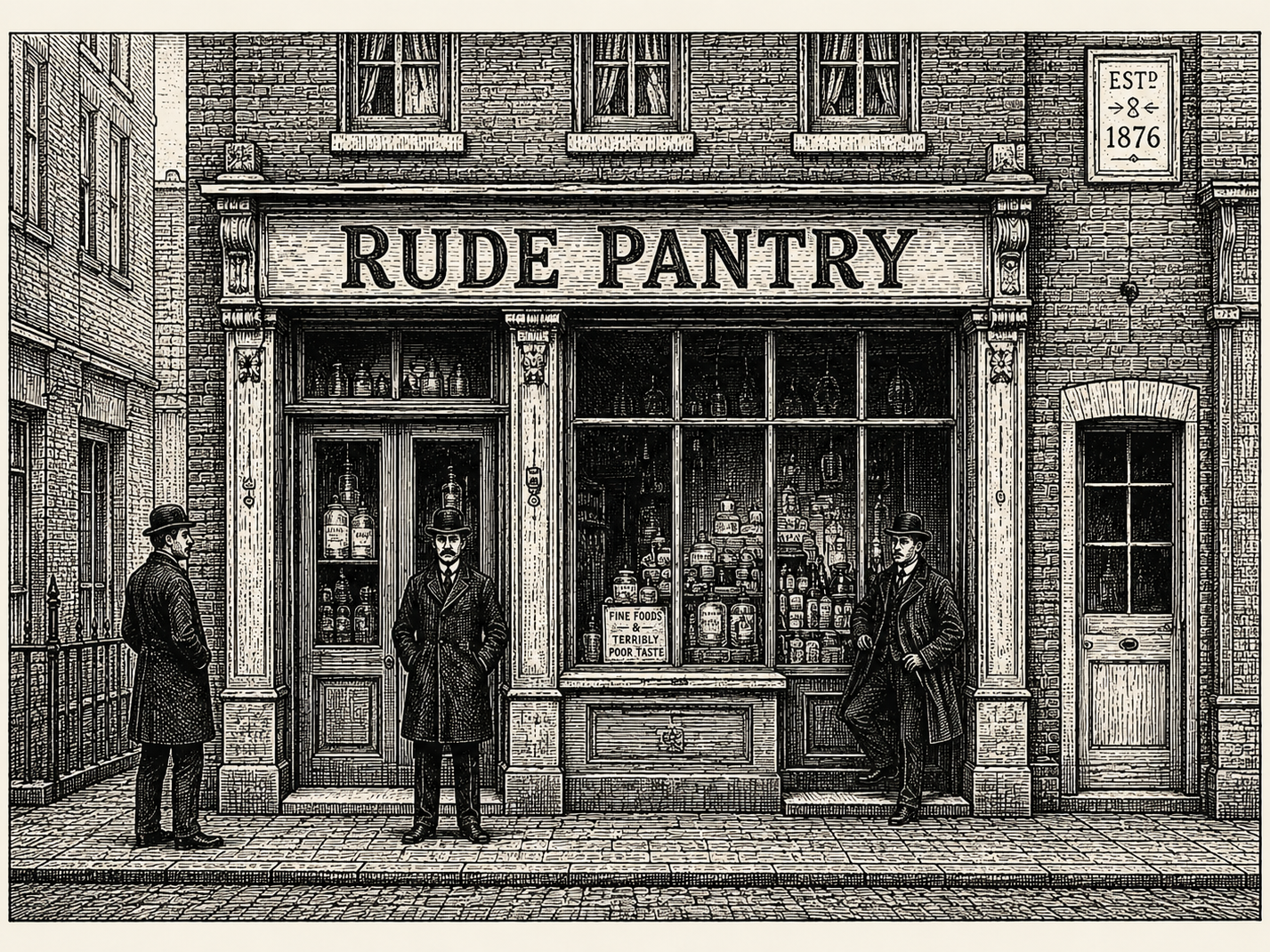
Born in Leeds on 22 July 1845, Wankswell grew up above his father’s provisions shop, surrounded by barrels, sacks, jars and the everyday business of Victorian grocery.
As a young man he travelled extensively throughout Britain, seeking out independent jam makers, confectioners, bakers, pickle specialists and sauce blenders. His surviving correspondence records early dealings with Mrs Bollock’s Biscuits, Wankington’s Preserves and the Yorkshire Cunt & Bastard Company, alongside dozens of considerably less successful concerns.
Rather than manufacture everything himself, Wankswell also commissioned established producers to make goods exclusively for Rude Pantry. Recipes, ingredients and standards were agreed centrally, while production remained in the hands of the people who knew how to make the stuff.
It was an arrangement that allowed a Leeds business to offer an unusually broad range without owning all of the factories required to fulfil their inventory.
“You can’t beat a good ‘Bastard!’ ”
Percival Richard Wankswell’s manufacturing philosophy
QUALITY WITHOUT COMPROMISE
Exacting Standards
Wankswell was notoriously specific about the goods sold under the Rude Pantry name. Suppliers were frequently required to revise products several times before approval, with particular attention paid to flavour, appearance and what surviving correspondence refers to simply as “the vulgarity of the article.” One early biscuit was rejected on four occasions before Wankswell was satisfied that it was sufficiently offensively labelled as well as delicious.
A surviving notebook from the period contains hundreds of observations on flavour, texture and presentation, alongside comments including “More bollocks”, “Far too respectable,” and the now famous instruction, “Needs considerably more banana shit bits.”
Although the society in which he had grown up was often characterised by formality, Wankswell maintained that strong language had an important place in civilised conversation. He believed swearing removed unnecessary pretension and encouraged honesty between people of every class.
Customers of Every Station
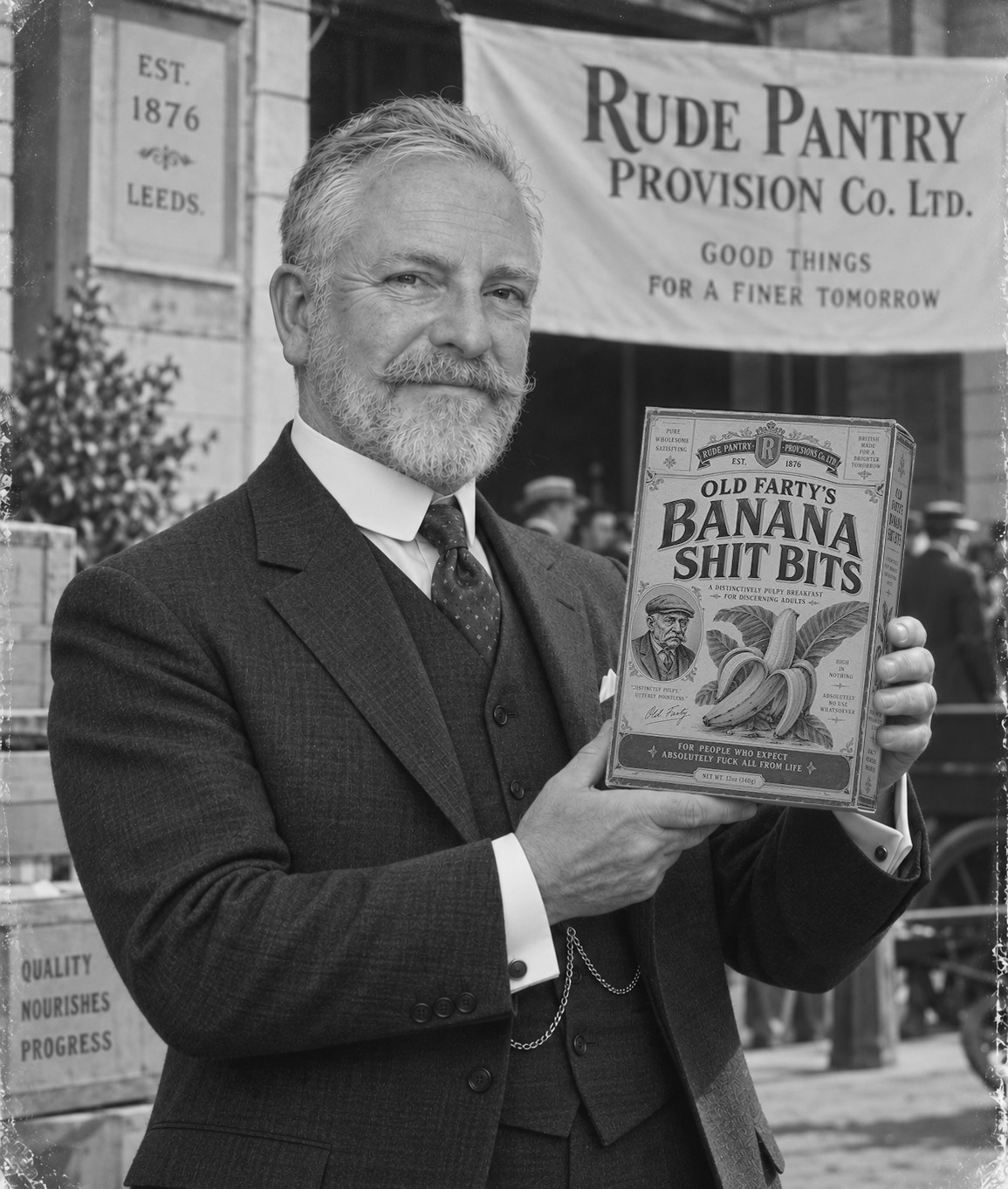
Rude Pantry attracted customers from across Victorian society. Account books record regular orders from industrialists, judges, labourers, clergy and actors, while several Members of Parliament arranged for provisions to be delivered directly to Westminster.
A surviving 1902 invoice to the Bishop of Ripon lists six jars of Knacker Jam, two pounds of Fuck-Tea, and a wholesale box of Lancashire Foof Laboratories Quality Clitoris Foreplay Lard.
1872
A love of Fanny
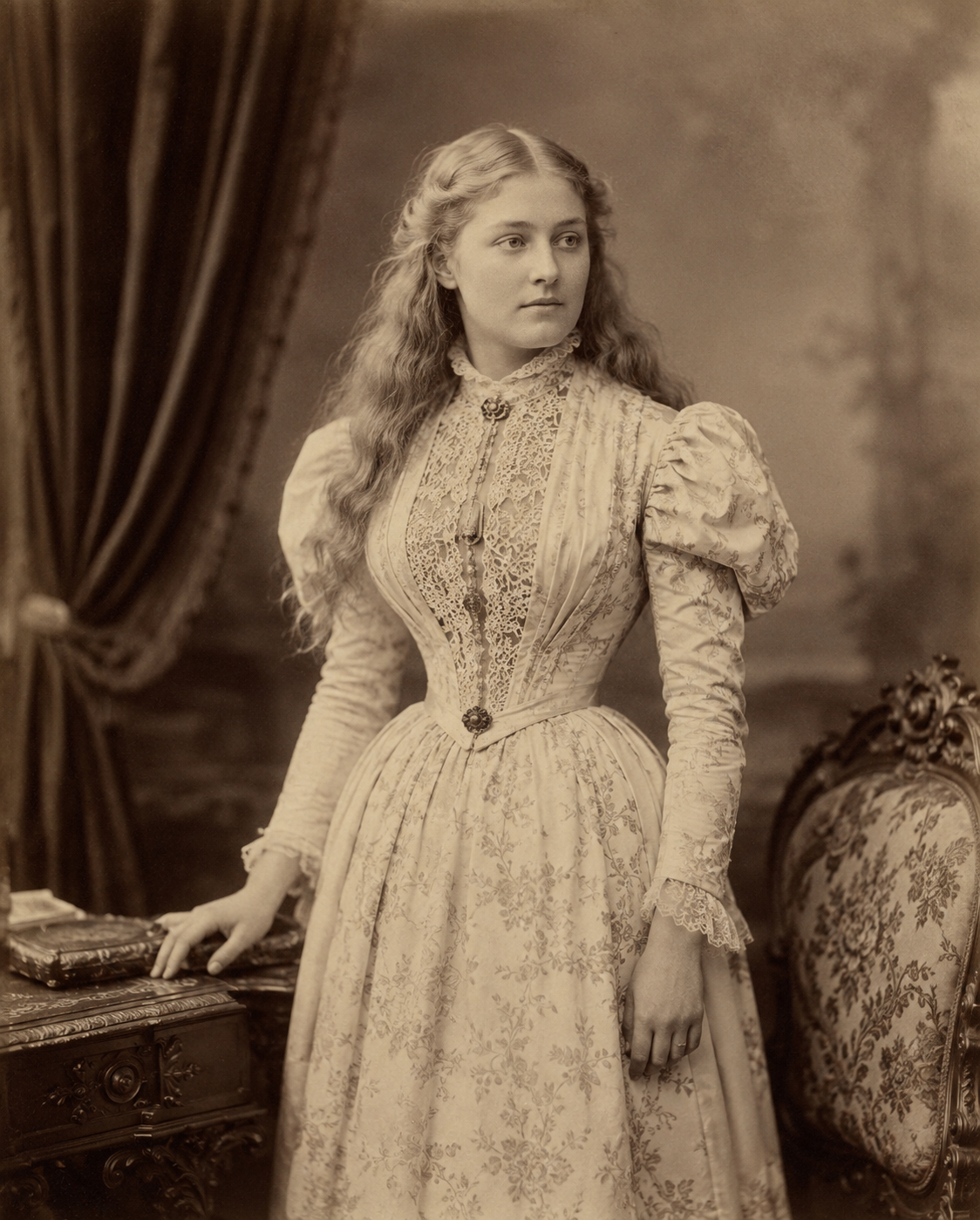
In 1872, Wankswell married Fanny Willmott, a Tailor’s daughter from Pontefract, whom he affectionately referred to throughout his diaries simply as “My Beloved Fanny.” Friends noted that conversations about Fanny occupied much of his day.
Fanny was herself a lively conversationalist. A keen amateur cricketer with a particular interest in Yorkshire pudding, she was known for discussing recipes and almost any other subject at considerable length.
Her stories apparently improved with repetition. One contemporary cricket club steward recalled that staff would gather during breaks to hear “Batter Fanny’s better funny batter banter”.
Percival’s diaries record that he enjoyed Fanny Batter regularly throughout their marriage.
Together they had two sons, John and Thomas, both of whom later joined the family business.
THE WANKSWELL ARCHIVE
Percival’s Papers
Wankswell was an avid archivist and foresaw the value of preserving his life and work for future generations. Thousands of his notebooks, letters, diaries, photos and working papers survive in the Wankswell Archive.
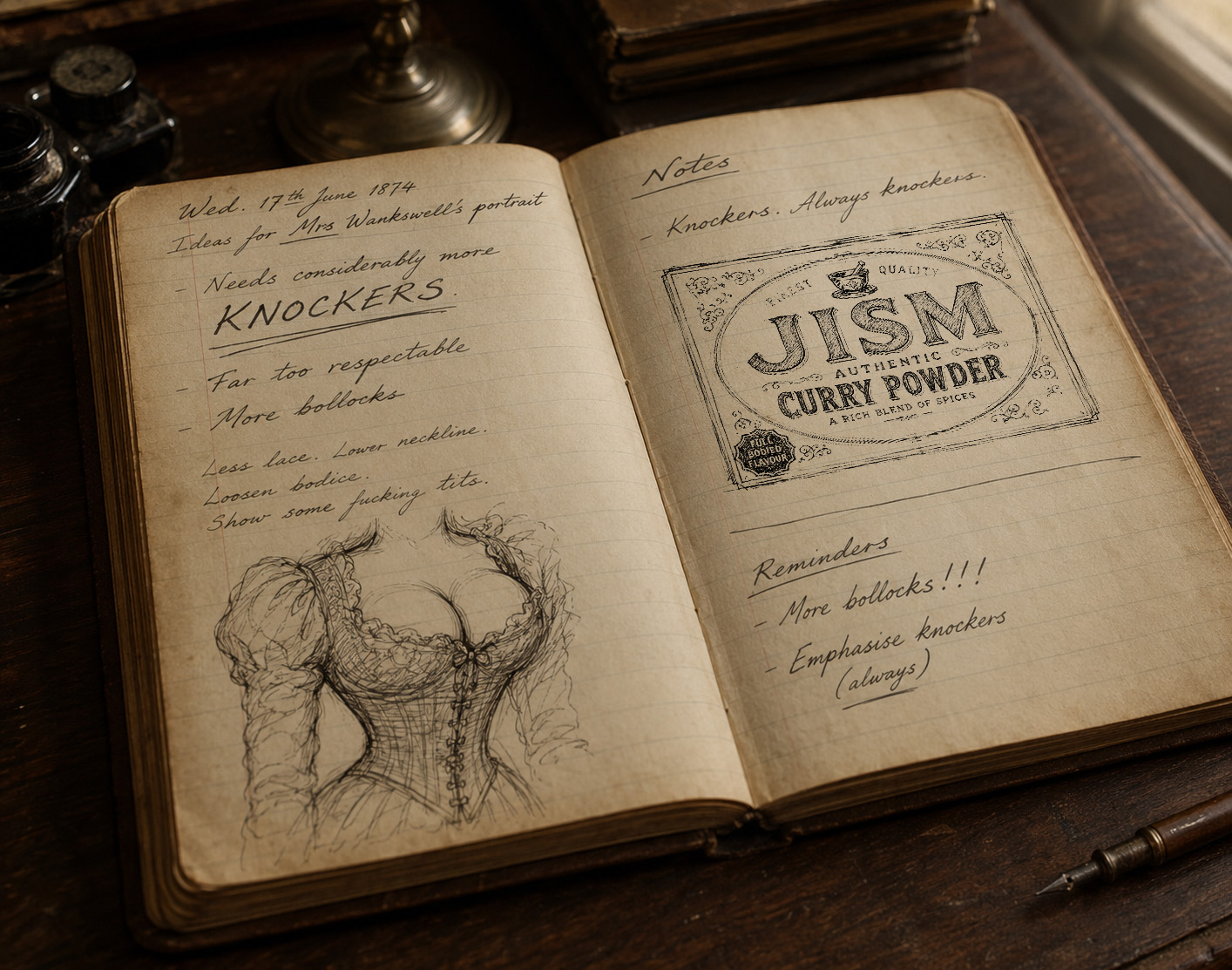
Wankswell’s working notebook, June 1874.
Product notes, preliminary label designs and a personal drawing of Fanny.
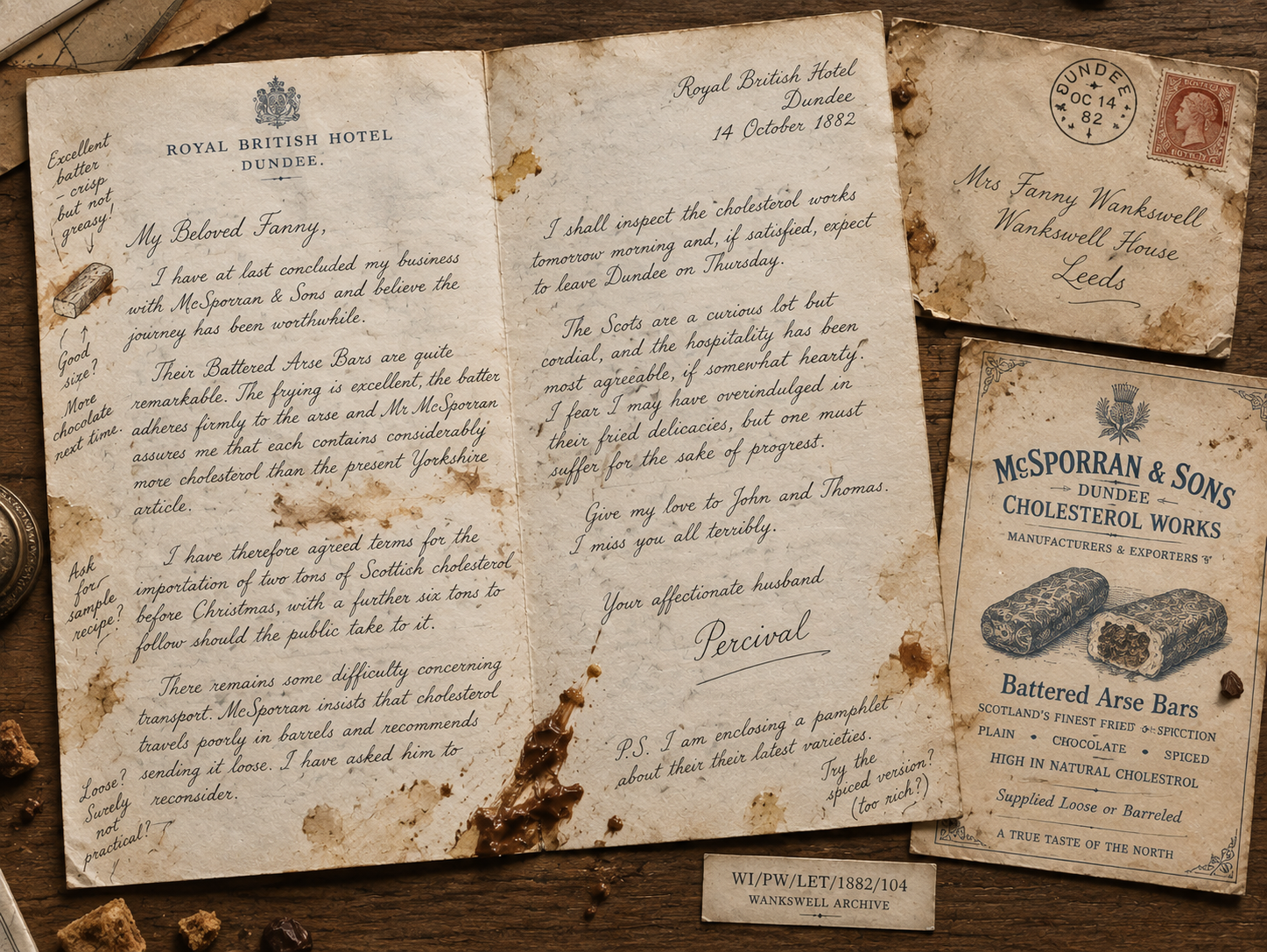
Letter to Fanny, October 1882.
Written during a supplier visit to Dundee.
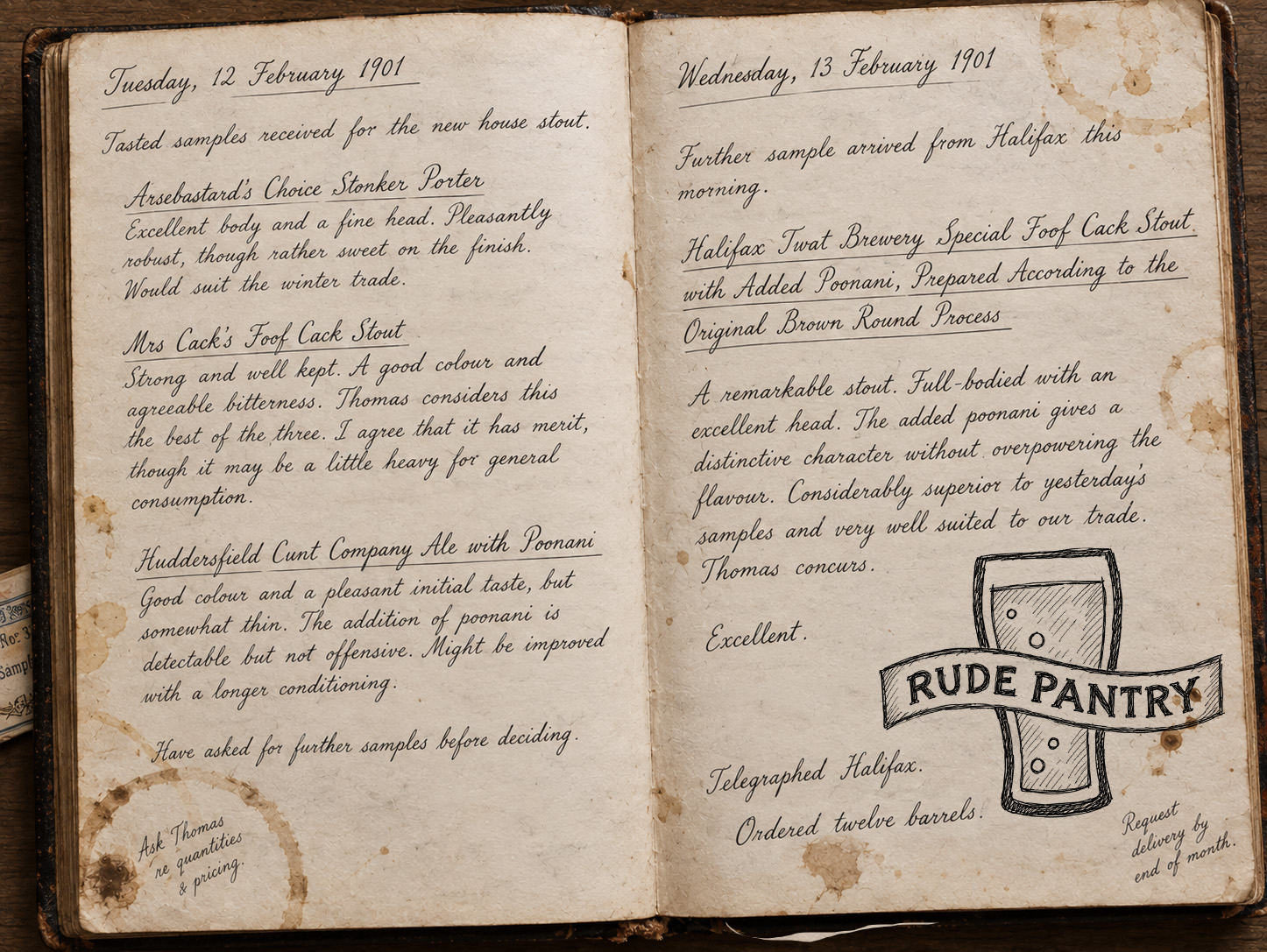
Personal diary, February 1901.
Notes relating to choosing new products from various breweries.
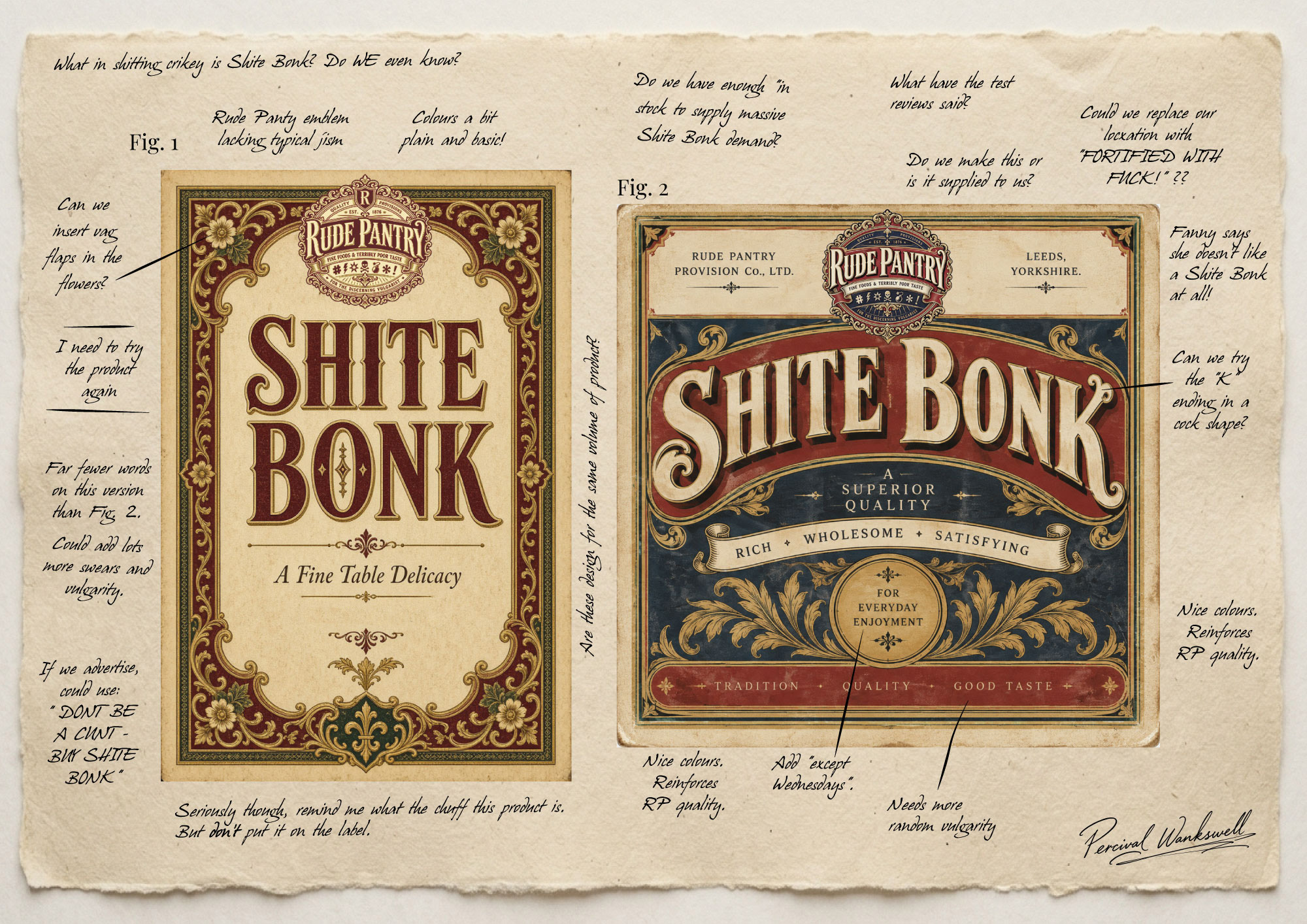
Packaging Design Approval, 1906
Wankswell required three further revisions before approving the design, and still didn’t know what the product was.
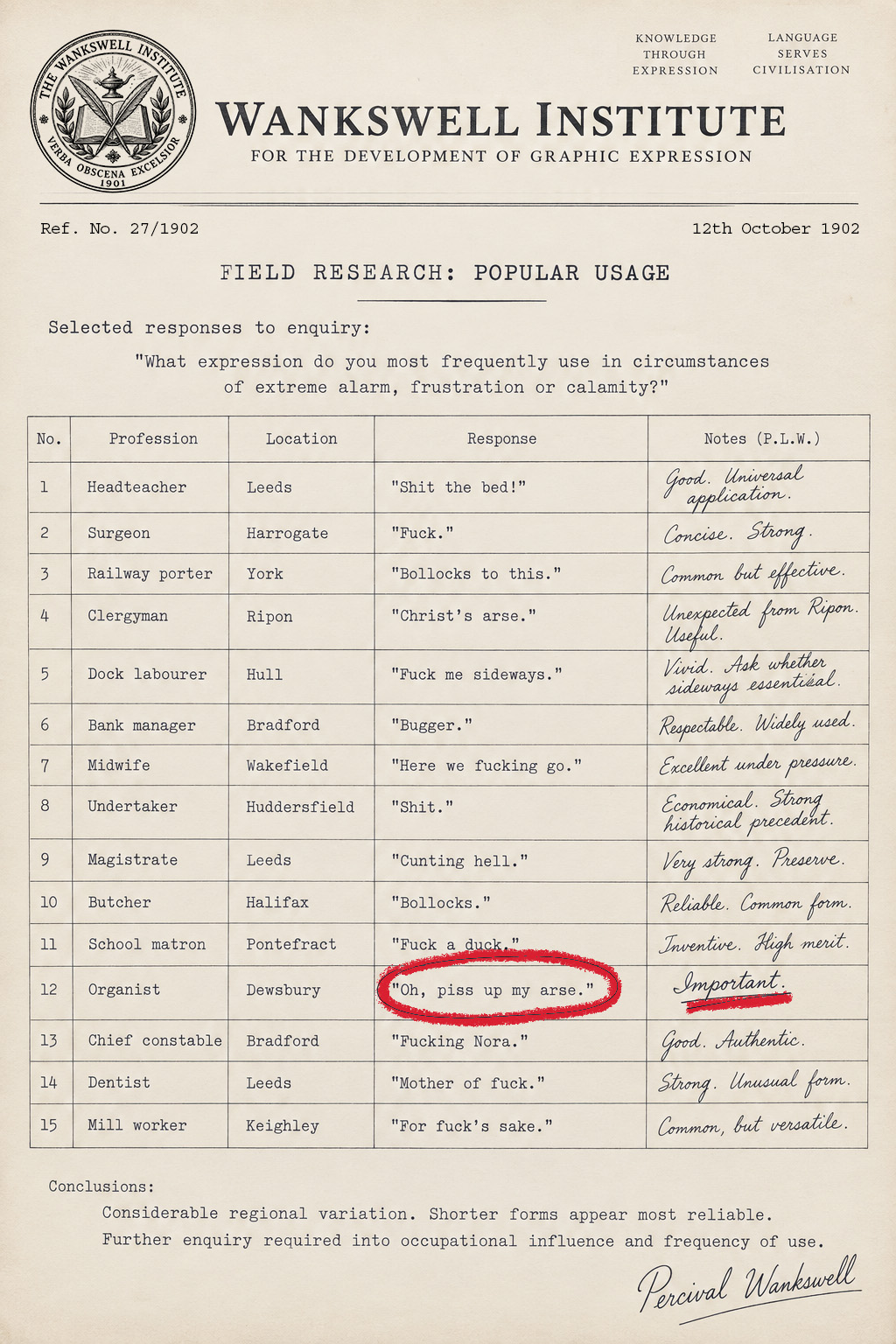
Institute research, 1902.
Percival’s own annotated early research into graphic expression.
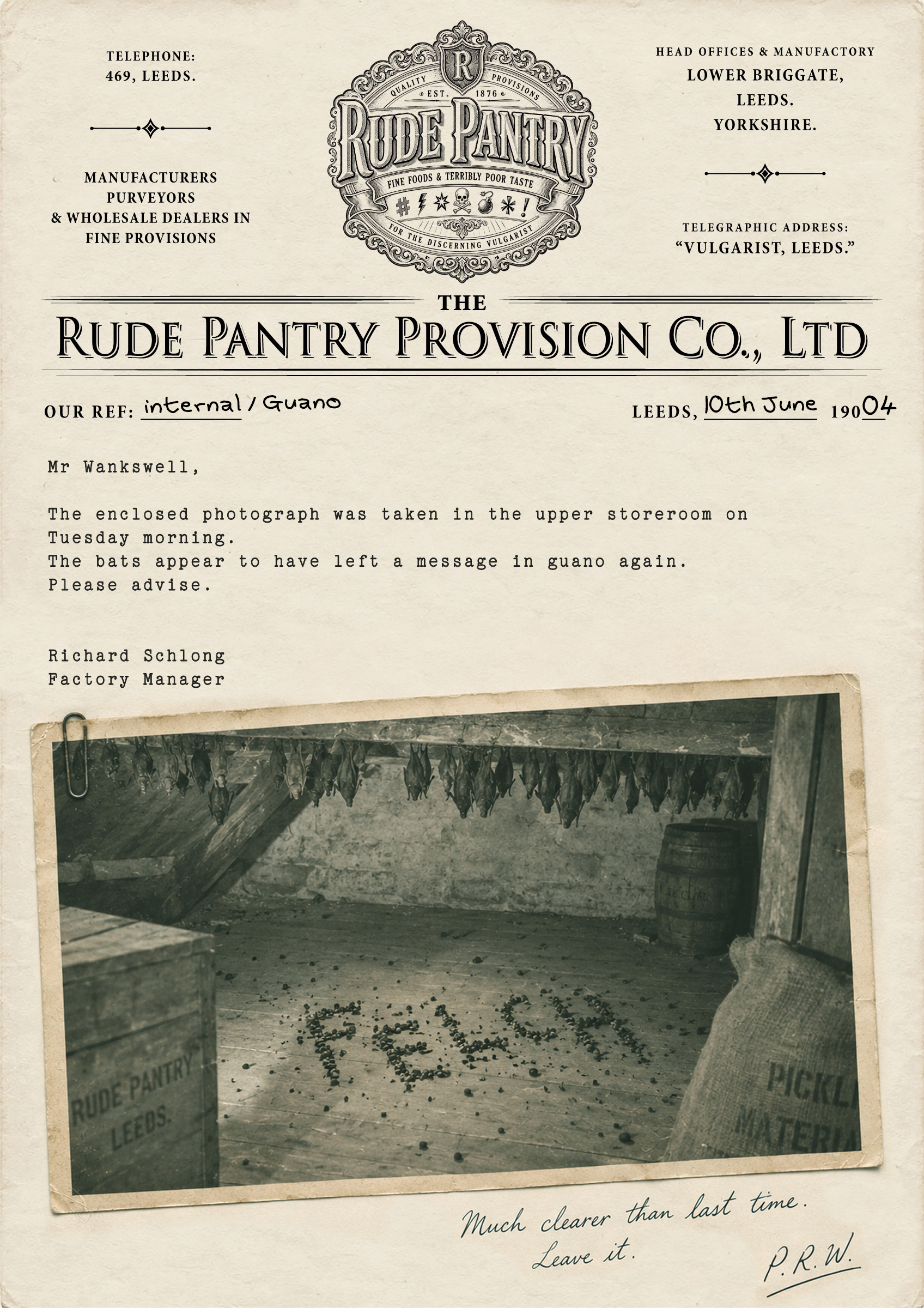
Internal Memo, June 1904.
A brief note concerning a storeroom matter requiring Percival’s immediate attention.
Selected material from the Wankswell Archive is on permanent display at WIDGE.
THE WANKSWELL INSTITUTE
The Development of Graphic Expression
Outside business, Wankswell believed colourful language deserved scholarly attention.
Mid-career, he established the Wankswell Institute for the Development of Graphic Expression, dedicated to the preservation, advancement and invention of expressive English.
Among its earliest projects was the Institute’s 1891 Register of Offensive Expressions, which attempted to classify profanity by severity, social setting and likely effect on elderly relatives. The project was abandoned after investigators discovered that one recorded “fuck” had inadvertently and unethically been transplanted from a dock worker into a middle-class child.
Over the following century the Foundation would make numerous contributions to modern profanity, including the standardisation of several now-familiar terms and phrases, though these achievements belong to another chapter of the company’s history.
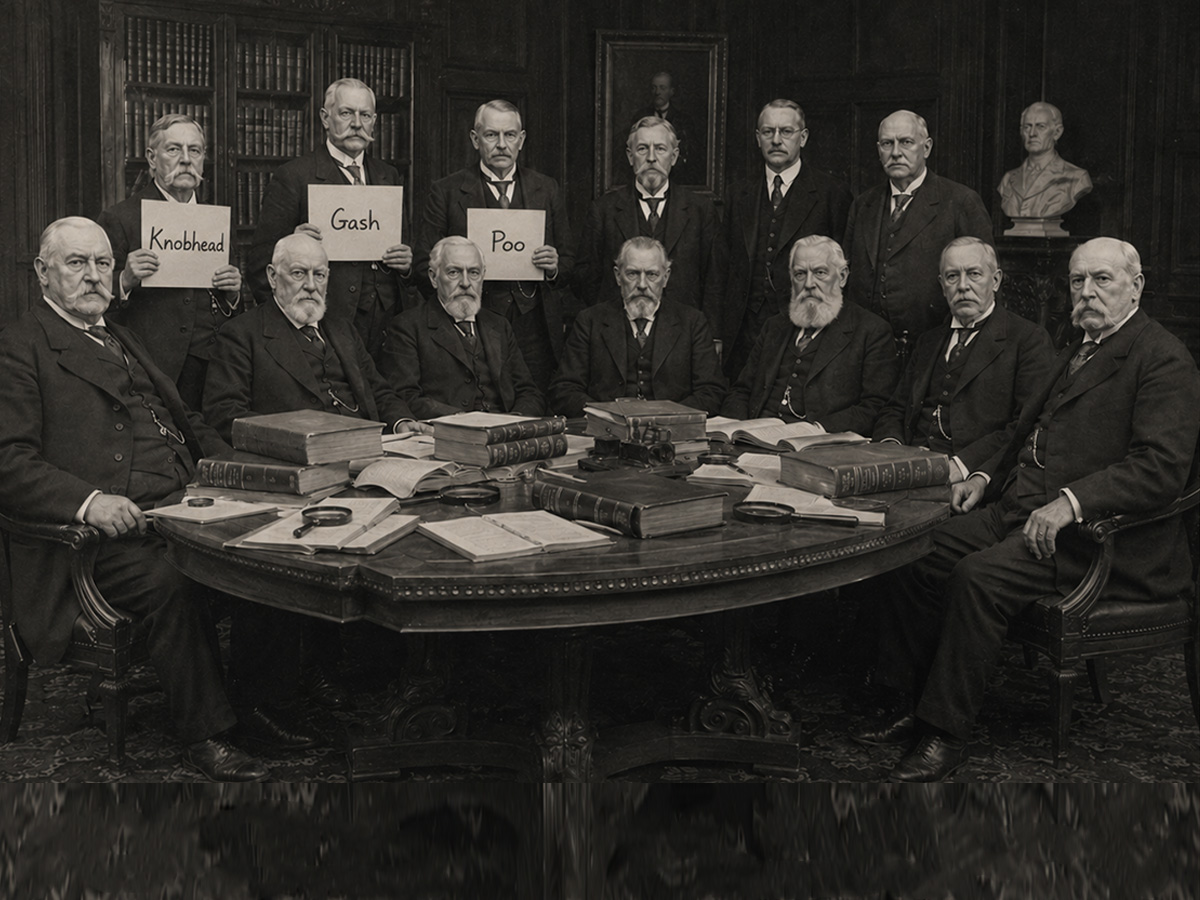
Board Members of WIDGE, 1899
18 APRIL 1915
An Unusually On-Brand Departure
Percival Richard Wankswell died aged sixty-nine after choking during the routine quality assessment of a prototype batch of Sugar Tits. Ever the perfectionist, he had reportedly insisted upon tasting them personally before approving full production.
“Both sudden and typically on-brand.”
The Leeds Mercury
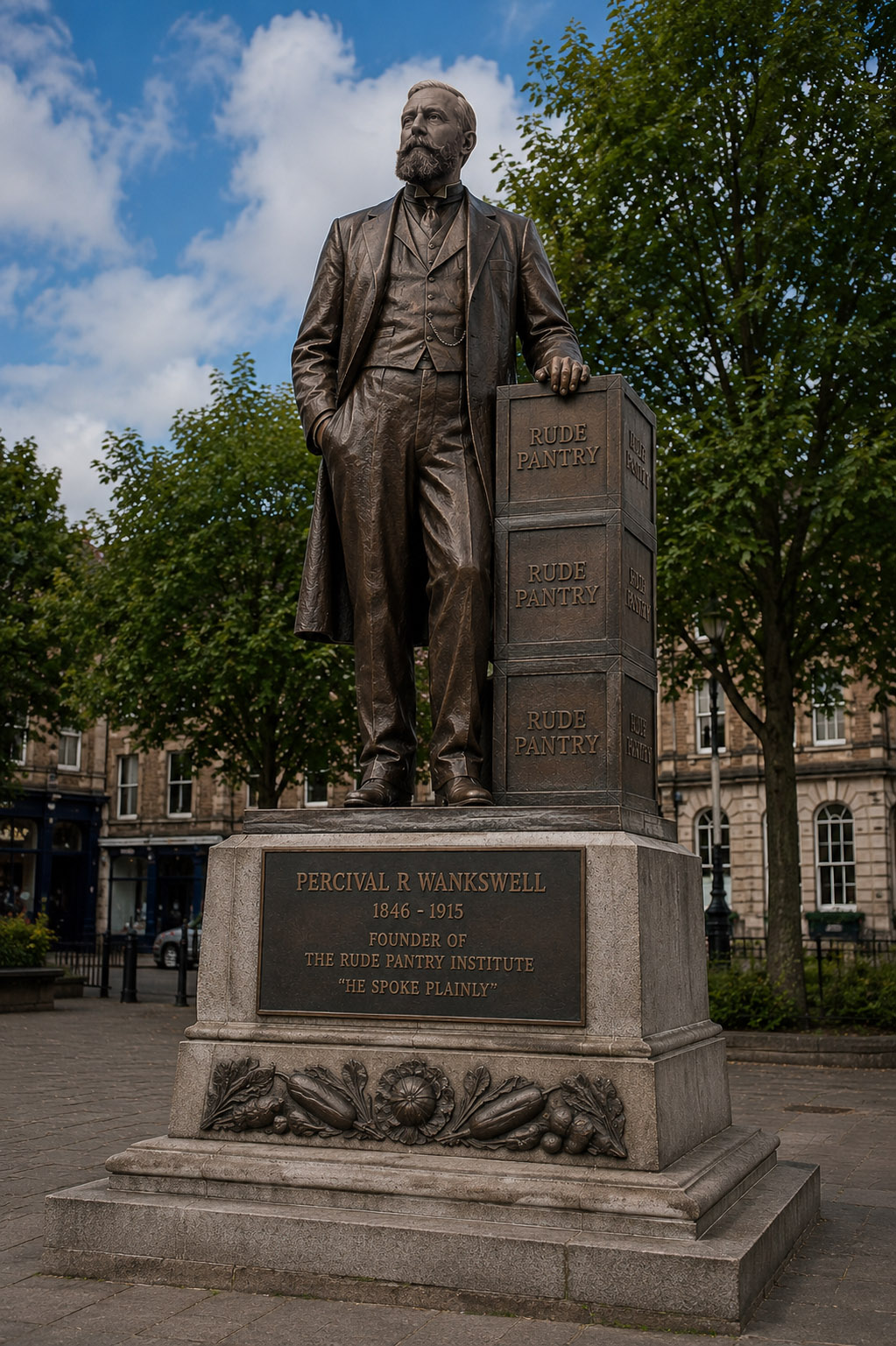
HIS LEGACY
The Principles Endure
Nearly 150 years after its founding, Rude Pantry continues to observe many of the principles established by Percival Richard Wankswell:
- Good flavour alone does not make a finished product.
- Respectability is a defect and should be corrected before dispatch.
- A vulgar name is no excuse for inferior wares.
- Where several perfectly good rude words are available, careful consideration should be given to all of them.
Not every Wankswell principle was truly understood or maintained. His further principle “Never trust a smooth-bottomed grocer” remains the subject of occasional research by the Wankswell Institute.